Malaria remains one of the greatest public health challenges in Nigeria, accounting for a significant proportion of the global burden of the disease. While conventional control measures such as insecticide-treated nets, indoor residual spraying, environmental sanitation, and antimalarial medicines have contributed immensely to reducing infections and deaths, the need for innovative and sustainable vector control strategies has become increasingly evident.



Recognizing this challenge, Diaspora Solution Group Nigeria (DSGN) has embarked on an ambitious research initiative aimed at reducing malaria transmission by targeting the reproductive capacity of female Anopheles mosquitoes using CRISPR-Cas9 gene-editing technology under controlled laboratory conditions. The initiative seeks to complement existing malaria control interventions by exploring modern genetic approaches capable of reducing mosquito populations responsible for transmitting malaria parasites. As with any gene-editing research, all activities are intended to comply with applicable ethical, biosafety, and regulatory requirements before any laboratory or future field-related activities are considered.
About DSGN
Diaspora Solution Group Nigeria (DSGN) is a non-profit organization committed to improving the quality of life of vulnerable communities through healthcare innovation, education, humanitarian interventions, research, and sustainable development. The organization believes that scientific innovation, strategic partnerships, and community engagement are essential to solving some of Africa’s most pressing public health challenges.
Over the years, DSGN has championed initiatives in health advocacy, disease prevention, educational support, community development, and humanitarian services. The malaria research initiative represents one of the organization’s most ambitious scientific programmes, bringing together experts from academia, public health institutions, government agencies, and international partners to contribute to Nigeria’s malaria elimination efforts.



The Journey Began with a National Conference
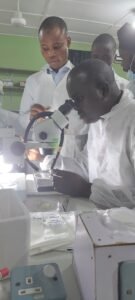
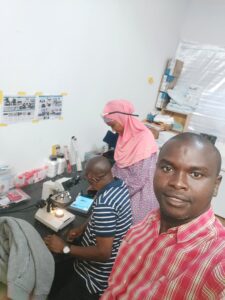
The foundation of this research initiative was laid during the National Conference on Malaria Elimination held in Osogbo, Osun State, where scientists, public health professionals, policymakers, researchers, development partners, and community leaders gathered to discuss innovative approaches for malaria elimination in Nigeria.
The conference served as a platform to introduce the concept of using CRISPR-Cas9 technology as a potential vector control strategy while encouraging dialogue on biosafety, ethics, scientific collaboration, and regulatory compliance. It also highlighted the importance of multidisciplinary partnerships in developing sustainable solutions to Nigeria’s malaria burden.
Building Strategic Partnerships
Following the conference, DSGN commenced extensive stakeholder engagement with leading organizations responsible for malaria control, public health policy, biosafety regulation, research, and programme implementation.
Among the key institutions approached were:
– National Malaria Elimination Programme (NMEP)
– Federal Ministry of Health (FMOH)
– National Biosafety Management Agency (NBMA)
– The Global Fund
– UNICEF
– Malaria Consortium
These engagements were designed to present the research concept, seek technical guidance, encourage collaboration, and ensure that the project aligns with Nigeria’s national malaria elimination strategy, international biosafety standards, and responsible scientific research practices.
Collaboration with Nigerian Universities
Recognizing that successful scientific innovation depends on strong academic partnerships, DSGN reached out to several Federal Universities across Nigeria to identify institutions with the expertise and infrastructure necessary to support advanced molecular biology and vector research.
After extensive consultations with leading researchers and professionals, the University of Ilorin was selected as the pilot institution for the proposed laboratory-based study. The University’s commitment to research excellence and interdisciplinary collaboration made it a suitable partner for initiating this phase of the project.
Progress Toward the Pilot Study
The project has progressed through several important developmental stages.
DSGN and the University of Ilorin have completed the rigorous process of developing and signing a Memorandum of Understanding (MoU) to define the responsibilities, governance structure, and collaborative framework for the research.
With this milestone achieved, preparations are now focused on establishing a dedicated Malaria Control Laboratory within the Department of Biochemistry, University of Ilorin, where the pilot laboratory study is planned to be conducted after all necessary institutional and regulatory approvals have been obtained.
The research team is led academically by Professor Faoziat Adenike Sulaiman, who heads the University’s scientific team, while Mr. Gbenga Ajayeoba, representing DSGN, serves as the Principal Investigator for the organization, coordinating the project’s strategic direction and collaboration with institutional partners.
A Vision for Scientific Innovation
The proposed laboratory study aims to investigate whether CRISPR-Cas9 technology can safely and effectively reduce the reproductive capacity of female Anopheles mosquitoes under controlled laboratory conditions. If future research demonstrates safety, effectiveness, and regulatory acceptability, the findings could contribute valuable scientific knowledge toward integrated malaria vector management strategies.
The initiative emphasizes responsible science, transparency, capacity building, and compliance with national and international ethical and biosafety standards throughout every stage of the research process.
Looking Ahead
The establishment of the Malaria Control Laboratory marks another significant milestone in DSGN’s long-term vision of positioning Nigeria as a contributor to cutting-edge malaria research. Beyond scientific discovery, the project seeks to strengthen local research capacity, train young Nigerian scientists, foster international collaboration, and generate evidence that may support future malaria control innovations.
While considerable work remains before laboratory investigations are completed, the progress achieved—from the National Conference in Osogbo, stakeholder engagements with government and development partners, collaboration with Nigerian universities, execution of the MoU with the University of Ilorin, and preparations for the pilot laboratory—demonstrates DSGN’s commitment to pursuing innovative, evidence-based solutions in the fight against malaria.
Through collaboration, scientific excellence, and responsible innovation, DSGN envisions contributing meaningfully to Nigeria’s journey toward a future where malaria is no longer a major public health threat.



Potential Impact of the CRISPR-Cas9 Malaria Vector Control Project in Nigeria and Africa
If this research is successfully completed, shown to be safe and effective, and implemented in accordance with all applicable regulatory and ethical requirements, it could have transformative impacts on malaria control in Nigeria and across Africa.
- Significant Reduction in Malaria Transmission
By reducing the reproductive capacity of female Anopheles mosquitoes, the project has the potential to substantially decrease the population of malaria-transmitting mosquitoes, leading to fewer malaria infections and supporting existing vector control measures.
- Reduction in Malaria-Related Deaths
With fewer malaria infections, Nigeria and other African countries could experience reductions in severe malaria cases and deaths, particularly among children under five years of age and pregnant women, who remain the most vulnerable populations.
- Lower Healthcare Costs
Reducing malaria transmission could lessen the financial burden on families and governments by decreasing spending on hospital admissions, medications, diagnostics, and emergency treatment, allowing healthcare resources to be redirected to other pressing health needs.
- Increased Productivity and Economic Growth
Fewer malaria cases would result in fewer workdays and school days lost due to illness. Improved health can enhance productivity, strengthen household incomes, and contribute positively to national economic development.
- Reduced Dependence on Chemical Insecticides
An effective genetic vector control strategy could complement existing malaria interventions and help reduce reliance on chemical insecticides, which face challenges such as insecticide resistance and environmental concerns.
- Strengthening Scientific Capacity in Africa
The project will contribute to building local expertise in molecular biology, genetics, biosafety, bioinformatics, and vector biology by training Nigerian scientists, postgraduate students, and laboratory personnel in advanced research techniques.
- Establishment of Advanced Research Infrastructure
The proposed Malaria Control Laboratory at the University of Ilorin will strengthen Nigeria’s research infrastructure and provide a platform for future studies on malaria, mosquito biology, and other vector-borne diseases.
- Promotion of National and International Collaboration
The initiative brings together government agencies, universities, researchers, public health institutions, and international partners. Such collaboration promotes knowledge sharing, technology transfer, and stronger scientific partnerships.
- Contribution to Africa’s Malaria Elimination Goals
The evidence generated from this study could inform future malaria control policies and support broader malaria elimination efforts across Africa, subject to scientific validation and regulatory approval.
- Positioning Nigeria as a Leader in Biotechnology Research
Successful implementation of this project would enhance Nigeria’s reputation as a leader in innovative biotechnology and public health research, demonstrating the country’s capacity to develop locally led solutions to major health challenges.
- Creation of Future Research and Innovation Opportunities
The project could serve as a foundation for future research into genetic approaches for controlling other disease vectors, fostering innovation and attracting investment in biotechnology and public health research.
- Long-Term Social Impact
Healthier communities mean improved educational outcomes, reduced poverty associated with disease, greater social stability, and improved quality of life. By contributing to sustainable malaria control, this initiative has the potential to support national development goals and improve the well-being of millions of people across Nigeria and Africa.
Conclusion
This research initiative represents an important step toward exploring innovative, science-based approaches to malaria control. If proven safe, effective, and acceptable through rigorous research and regulatory oversight, it could complement existing malaria interventions, strengthen scientific capacity, and contribute meaningfully to long-term malaria reduction efforts in Nigeria and across the African continent.